
Laser Cladding Electrical Armature/Electric Motor Journals
Leave a CommentTitanova’s Laser Cladding Benefit
Laser cladding or laser weld overlay has the ability to create thin weld overlays. This process permits the remanufacturing of electric armature journals without a significant amount of weld distortion or heat-affected zone.
This allows the remanufacturing of the smallest armature journals to the largest. Eliminating the need for sleeving and stubbing.
In addition, this also allows low dilution surface modification using corrosion- or erosion-resistant alloys. For surface corrosion, Titanova, Inc offers laser cladding of corrosion-resistant alloys such as all varieties of stainless steels, nickel and chrome-based alloys. For wear-resistant protection, Titanova can laser clad a variety of cobalt alloys [Stellite TM ].
Benefits of Precision Laser Cladding/Weld Overlay
- Thin clads
- Less pre-machining – typically only 0.025” per side required for laser cladding
- Less material build-up required = laser heat, less machining
- Low heat
- Very small heat-affected zones
- Low distortions
- Minimal dilution
- High deposition rates 3-5X faster than TIG or MIG
- Much smoother weld overlays
- Less post machining costs as compared to TIG and MIG weld overlay requirements
- Allows the ability to improve corrosion and erosion resistance by selecting appropriate overlay materials
Super Low Heat Laser Cladding – Capability Demonstration
To demonstrate the tremendous advantages of laser cladding over traditional welding for journal build-up restoration, we used a wash machine motor armature. See Figure 1. This output journal has a starting diameter of 0.43” X 1” length [11 mm Ø x 25.4 mm]. This small diameter is nearly impossible to fix with traditional welding. The goal is to build up enough material to achieve a 0.5” diameter.
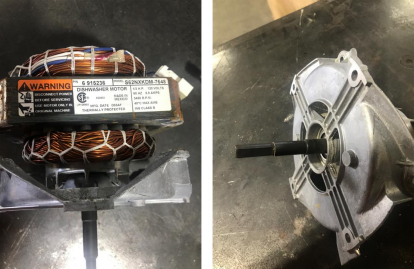
Figure 1 – Dishwasher Motor and associated journal shaft
No one would even think of TIG or MIG welding up a shaft of this small of diameter, 11 mm [0.43”] and a length of 1”. See Figure 2.
The demonstration of the low heat weld overlay is to build up 0.030” per side with 316 SS and machine to 0.5”. This is not achievable with any other welding process.
See Figures 2 and 3 – Before and after pictures.
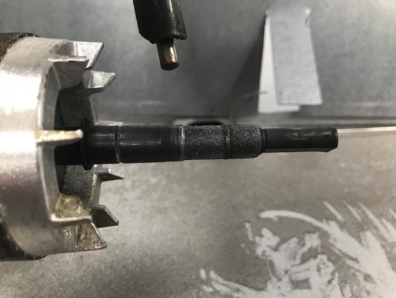
Figure 2 – First layer approximately 0.015” per side
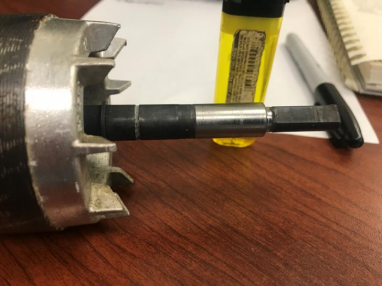
Figure 3 – Finished machined 0.5” Diameter
Conclusion
Laser Cladding is a very low heat weld overlay process that enables the remanufacturing of many components that, to date, were unrepairable or cost-prohibitive by any other welding process. In addition, the very smooth as-clad surface makes the post-clad machining very affordable. This opens the door to repairing a whole new portfolio of electrical armatures.
This low heat and associated small heat-affected zone creates a robust, fatigue-resistant repair, which can be applied to much larger armatures.
Titanova Capacity
Titanova has two stations for laser cladding refurbishment of armatures, shafts, and rolls.
#1 6000 lbs, 13’ 7” 72” swing
#2 20000 lb, 32’ and 100” swing.
An example armature that only has 7” long defective journals. This armature is 4750lb and has an 88” OAL. See Figure 4.
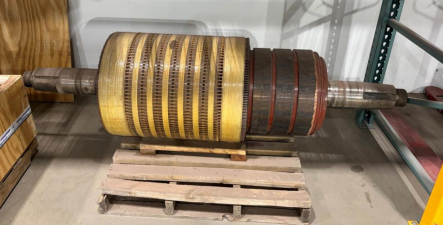
Figure 4 – GE 824 DC armature
The only area to be repaired is one end. See Figure 5.
The customer pre-machined the journals by 0.025” below the finish.
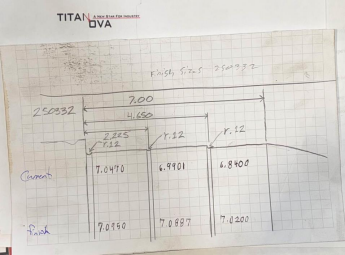
Figure 5 – Surfaces to be repaired.
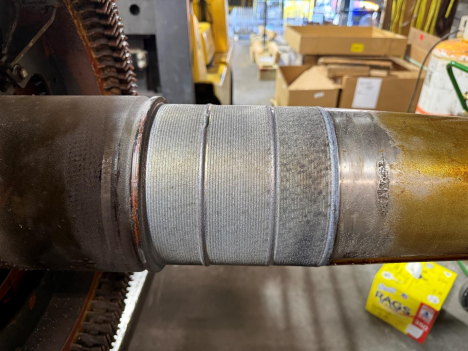
Figure 6 – Laser Clad journal
Titanova laser clad 410 SS to these journals, producing a pore free overlay with a hardness of approximately 35 HRC. We can also build out thrust faces, around key-ways, and tapered surfaces.
The time required to perform this laser weld overlay repair is approximately 1 hour, including setup. Therefore, less than 1-day turnaround times are achievable
Conclusion
Titanova laser cladding technology for repairing armature journals enables the weld repair of all armatures while at the same time realizing significant cost and time savings for the Electrical motor repair industry. Contact Titanova for a quote today!